
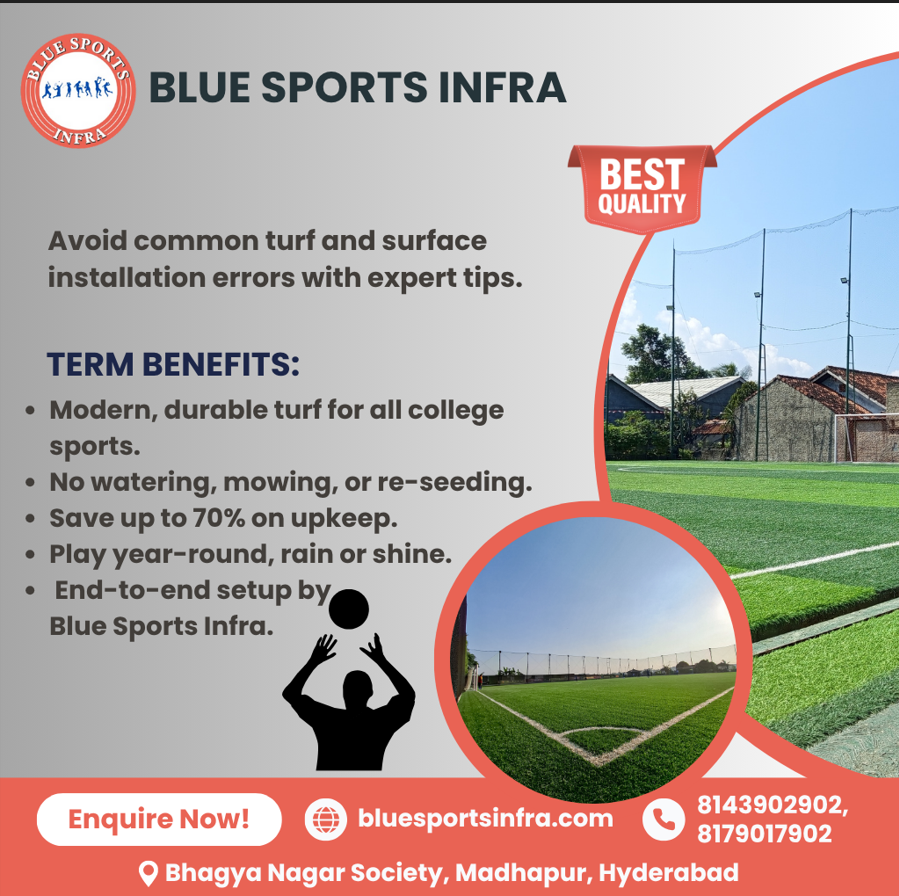
How Colleges in Telangana Can Set Up Low-Maintenance Synthetic Grounds
The Rise of Synthetic Grounds in Telangana Sports infrastructure in Telangana has witnessed a massive transformation over the past decade. As colleges and universities aim to promote holistic education, the focus on physical fitness and competitive sports has never been stronger. However, maintaining traditional grass-based fields in a region known for its semi-arid climate, water scarcity, and high maintenance costs is increasingly impractical. That’s where synthetic sports grounds come in — a revolutionary alternative offering year-round usability, minimal upkeep, and professional-level performance. Across Hyderabad, Warangal, and Karimnagar, colleges are rapidly adopting synthetic turf technology to ensure that students can train and play regardless of weather or maintenance challenges. In this detailed guide, we’ll cover: Why Telangana Colleges Are Shifting to Synthetic Grounds 1. The Challenge of Maintaining Natural Grass Fields Telangana’s tropical climate makes natural grass maintenance both costly and unsustainable. The region experiences long dry summers with temperatures exceeding 40°C and limited rainfall during monsoon months. Maintaining a lush green field under these conditions requires constant irrigation, mowing, and chemical treatments — all of which drain budgets and resources. Colleges often face: Over a five-year period, maintaining even a single football or cricket field can cost several lakhs — not to mention the opportunity cost of lost practice time. 2. Synthetic Grounds Offer Smart, Sustainable Solutions Synthetic turf fields eliminate nearly all these challenges. They require no water, fertilizers, or mowing, and remain consistent in quality and performance year-round. Modern turf systems use advanced polyethylene (PE) or polypropylene (PP) fibers, which closely mimic the look and feel of real grass while being highly durable and weather-resistant. For Telangana colleges, this means: It’s not just a maintenance solution — it’s a smart investment in sustainability, student wellness, and institutional reputation. Benefits of Low-Maintenance Synthetic Grounds for Colleges 1. Cost-Effective in the Long Run While the upfront cost of synthetic turf installation can range from ₹700 to ₹1200 per sq. ft., the maintenance savings over time are remarkable. Natural grass requires constant watering, trimming, and pest control, whereas synthetic fields only need occasional cleaning and infill adjustment. Let’s break it down: Over a decade, colleges can save over 70% of recurring expenses — funds that can be redirected toward sports training programs, equipment, or scholarships. 2. Durable and All-Weather Ready One of the greatest advantages of synthetic turf is its resilience under heavy use and varied weather conditions. Whether it’s a football tournament during the monsoon or daily physical education classes in summer, synthetic fields stay playable without risk of mud, puddles, or grass damage. Telangana’s colleges benefit from: Blue Sports Infra’s synthetic turf systems are built to FIFA Quality standards, ensuring optimal ball roll, bounce, and player safety. 3. Multi-Sport Flexibility Instead of allocating separate fields for each sport, synthetic grounds allow colleges to maximize limited space. A single synthetic field can be custom-marked for multiple sports such as: This versatility makes synthetic grounds ideal for urban colleges in Hyderabad and compact campuses that want professional-grade facilities without large land requirements. 4. Professional Appeal and Student Attraction A visually appealing, professional-grade turf instantly elevates a college’s image. Students are drawn to institutions that promote sports, fitness, and wellness. Moreover, modern facilities can attract: In an era where infrastructure quality impacts admissions, synthetic grounds serve as a long-term branding and recruitment tool. Step-by-Step Guide: Setting Up a Synthetic Ground in Telangana Setting up a turf isn’t just construction — it’s a technical project combining civil engineering, material science, and sports design expertise. Step 1: Site Survey and Feasibility Study A proper feasibility study ensures that your project is built to last. This includes: Blue Sports Infra conducts detailed on-site surveys and geotechnical evaluations before beginning any project, ensuring the foundation is solid for long-term performance. Step 2: Ground Preparation and Base Construction The base layer determines the turf’s performance and durability. It typically involves: This foundation ensures player safety, even ball bounce, and excellent water drainage, even during heavy rainfall. Step 3: Turf Installation Once the base is ready, the turf rolls are laid out, joined with adhesive seam tape, and secured firmly. Then, silica sand and rubber granule infills are added to enhance traction, cushioning, and turf stability. Each turf type is chosen based on sport and usage: The final brushing ensures even infill distribution and a realistic playing experience. Step 4: Line Marking and Finishing Sport-specific markings are applied using UV-resistant paint that withstands Telangana’s heat. For multipurpose use, colleges often opt for removable or dual-color markings to accommodate different games. Step 5: Testing and Quality Check Before completion, the surface undergoes rigorous tests for: Blue Sports Infra follows international testing protocols to guarantee professional-grade performance. Choosing the Right Synthetic Turf for Telangana’s Climate 1. Types of Synthetic Turf Each turf type serves different purposes: 2. UV and Heat Resistance In Telangana, temperatures often exceed 40°C. UV-protected and heat-resistant turf ensures: 3. Drainage Capacity A good drainage system prevents puddles and surface damage. Always opt for perforated turf backing and proper slope design to handle heavy monsoon rains. 4. Warranty and Quality Certifications Choose turf that comes with: Maintenance Tips for Synthetic Grounds Synthetic grounds require minimal maintenance, but consistent light care helps ensure longevity. 1. Weekly Grooming Use a power broom or brush to remove dust, leaves, and debris while keeping turf fibers upright. This prevents compaction and keeps the turf visually appealing. 2. Monthly Inspection Check for: 3. Periodic Infill Top-Up Maintaining correct infill levels (rubber + sand) improves traction, safety, and durability. 4. Drainage System Cleaning Before the monsoon season, inspect and clear all drains to avoid water stagnation and turf lifting. 5. Annual Professional Servicing A yearly maintenance visit from Blue Sports Infra’s expert team can include: With these practices, synthetic grounds can maintain optimal performance for a decade or more. Why Choose Blue Sports Infra for Synthetic Ground Construction 1. Local Expertise in Telangana Blue Sports Infra has worked extensively across Telangana, understanding the soil conditions, climate, and institutional needs unique to the
How Colleges in Telangana Can Set Up Low-Maintenance Synthetic Grounds Read More »