Artificial turf has revolutionized sports infrastructure in India, especially in football, cricket, multi-sport arenas, and school playgrounds. Today, one of the toughest decisions investors and sports facility owners face is choosing between imported turf vs local turf.
While imported turf brands from Europe, the Middle East, and Southeast Asia claim superior performance, India’s local manufacturers have become more competitive in recent years with budget-friendly options. But does price tell the whole story? Absolutely not.
This guide breaks down real-world factors like player safety, heat resistance, UV stability, durability, maintenance cost, and ROI, so that you can confidently choose the right turf for your project.
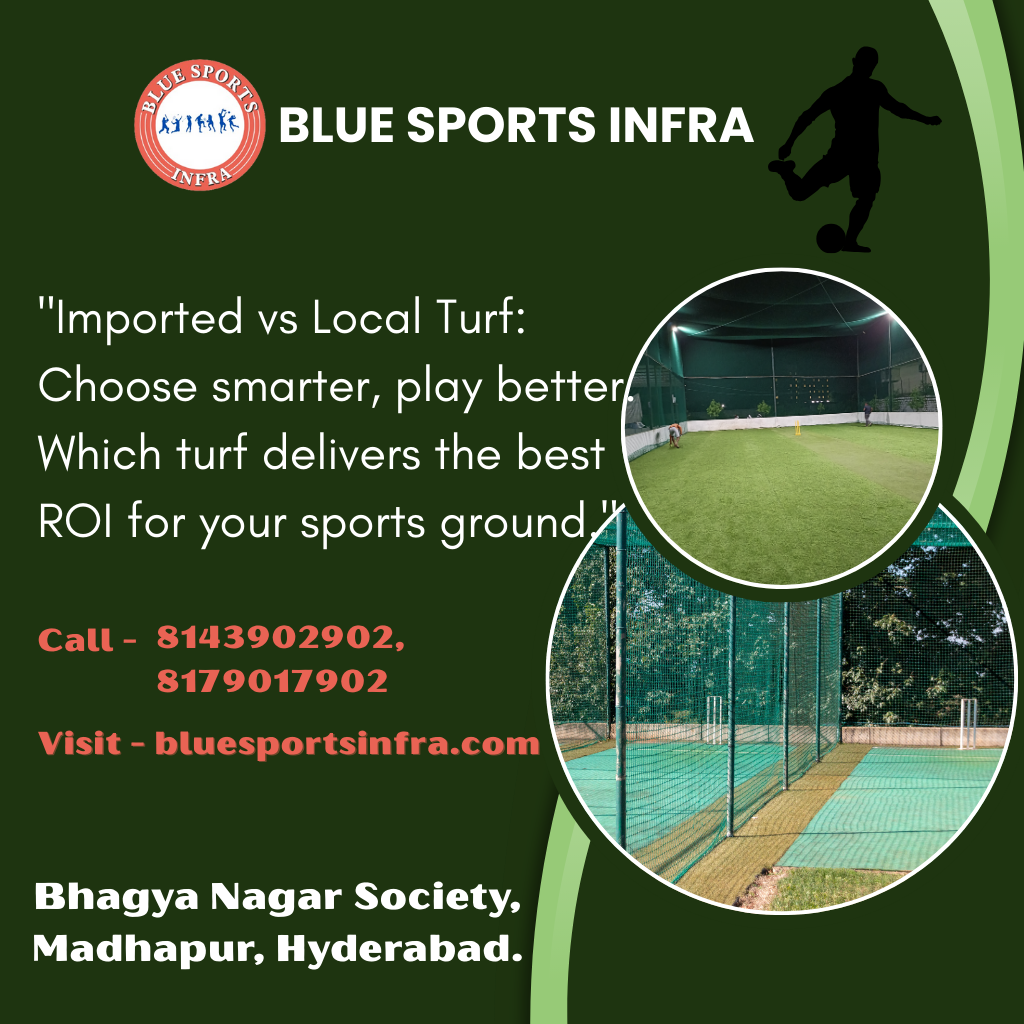
1. Understanding the Difference: Imported Turf vs Local Turf
Before comparing, it’s important to understand how these two categories differ:
Imported Turf
- Manufactured by leading global turf companies
- High-quality monofilament or fibrillated yarn
- Excellent shock absorption and ball roll consistency
- Engineered for long-lasting performance
- Usually comes with international certifications (FIFA/ITF-compliant)
Local Turf
- Manufactured within India
- More affordable upfront
- Quality is improving, but consistency varies
- Limited international certification
- Better suited for entry-level or low-footfall facilities
Key Insight: Imported turf focuses on long-term performance and safety, whereas local turf focuses on cost-effectiveness.
2. Durability & Lifespan: Who Wins?
This is the most important factor for schools, academies, and commercial turf owners.
Imported Turf Durability
Imported turf typically lasts 8–12 years depending on footfall and maintenance.
This is because:
- Yarn is UV-stabilized
- Fibers are stronger and thicker
- Infill retention is better
- Less stitch loss over time
Local Turf Durability
Local turf lasts 4–6 years, provided maintenance is done regularly.
However:
- Yarn quality varies
- May lose color faster under Indian sun
- Can flatten sooner, affecting ball behavior
Winner: Imported Turf
Long-term durability makes imported turf the better investment for high-use sports facilities.
3. Climate Resistance: Why Indian Weather Matters
India’s climate is harsh on turf—high heat, dust, humidity, and monsoon rainfall challenge turf integrity.
Imported Turf
- Better UV protection
- Lower heat absorption
- Superior drainage systems
- Resistant to fiber melting or shrinking
Local Turf
- Works well in moderate climates
- More prone to heat-induced stiffness
- Drainage performance varies
Winner: Imported Turf for year-round conditions in India.
4. Performance & Player Experience
Sporting performance is where the difference becomes most noticeable.
Imported Turf Advantages
- Smoother ball roll
- Better ball bounce
- Reduced injury risk
- Excellent grip for sudden movements
- Consistent energy return
Local Turf Advantages
- Suitable for casual play
- Good for schools with limited budgets
If your facility caters to football academies, professional training, or tournaments, imported turf offers clear advantages.
5. Maintenance Requirements & Costs
Even the best turf demands maintenance—but some turfs demand less.
Imported Turf
- Longer fiber memory
- Slower infill displacement
- Less frequent grooming required
- Low long-term maintenance cost
Local Turf
- Needs more frequent brushing
- Infill redistributes quickly
- Fibers flatten easier
- Higher long-term maintenance effort
Conclusion: Imported turf = lower lifetime maintenance cost.
6. Cost Comparison: What Should You Expect?
Imported Turf Cost
₹75–₹150 per sq. ft. depending on brand & certification.
Local Turf Cost
₹45–₹75 per sq. ft.
Long-Term Cost Breakdown (10-year view)
| Factor | Imported Turf | Local Turf |
|---|---|---|
| Initial Cost | Higher | Lower |
| Maintenance | Low | High |
| Replacement Cycle | Every 10–12 years | Every 4–6 years |
| Player Satisfaction | High | Medium |
| ROI | Higher | Moderate |
Imported turf gives 30–40% higher return on investment in commercial setups.
7. Turf Selection Based on Facility Type
Different projects require different turf standards.
Football Academies / Tournament Grounds
✔ Imported turf only
✔ FIFA-certified recommended
✔ Consistent performance required
Commercial Turf Grounds (5v5 / 7v7)
✔ Imported turf ideal
✔ Local turf ok for low-budget small grounds
Schools & Institutions
✔ Local turf works for basic play
✔ Imported turf recommended for multi-sport usage
Private Gyms / Rooftop Sports
✔ Local turf typically sufficient
Before buying turf, check for:
- Warranty terms
- UV resistance rating
- Yarn thickness (dtex)
- Pile height (40–60mm for football)
- Infill compatibility
- Stitch rate & gauge
- Drainage rate
The right decision here ensures long-term performance.
9. Final Recommendation
If your goal is long-term durability, professional play, and ROI, choose imported turf.
If your goal is budget optimization for low-footfall areas, local turf works fine.
10. Why Choose Blue Sports Infra?
Blue Sports Infra provides:
- Premium imported turf (FIFA-approved)
- High-quality Indian turf options
- Expert consultation
- Complete turnkey project execution
- Maintenance and after-service support
Whether you’re building a commercial sports turf, school playground, or academy ground, our team ensures the right turf selection based on performance, budget, and long-term value.
Conclusion
Choosing between imported and local turf doesn’t have to be confusing. Once you understand durability, performance, cost factors, and maintenance, the decision becomes clear. Make sure your turf aligns with your long-term goalsand invest wisely.